

If you’ve been watching the Seattle and Eastside real estate market from the sidelines, wondering whether now is the right time to make a move as an investor, I want to make a case that I think will reframe how you’re looking at this opportunity.
Because here’s what I’ve watched play out over years of working in this market: the investors who win here are the ones who understand what kind of market this is — and commit to it with a long-term mindset.
Let me break it down for you.
Not all real estate markets are created equal. What makes Seattle and the Eastside different — and consistently attractive to investors — comes down to a few structural advantages that aren’t going away anytime soon.
A World-Class Employment Base
Seattle is home to some of the most powerful employers on the planet. Microsoft, Amazon, Boeing, and a thriving ecosystem of tech and biotech companies continue to drive job creation and attract high-earning talent from across the country and around the world. The AI investment cycle is actively accelerating hiring and office expansion across the region right now.
That employment base creates something invaluable for real estate investors: sustained, reliable demand for housing.
In-Migration That Doesn’t Quit
Washington State has no income tax. That single fact continues to draw high earners — particularly from California — who view Seattle home prices as a relative value even at current levels. Bay Area transplants, remote workers, and international professionals continue flowing into the region, keeping demand for both ownership and rental housing consistently elevated.
Geography Works in Your Favor
Seattle is hemmed in by water, mountains, and protected land. There is a finite amount of developable real estate in this region. That geographic constraint, combined with local zoning that limits density in many neighborhoods, means supply will always struggle to keep pace with demand. For investors, that’s a powerful long-term tailwind.
I believe in being straightforward with my clients, so let me be clear about something: the Seattle and Eastside rental market is not a market where you’re going to generate significant monthly cash flow right out of the gate. At current price points, monthly returns can be neutral or even slightly negative once you factor in property management costs and Washington State’s tenant protection framework.
But here’s what that picture misses entirely.
The wealth in this market is built through equity appreciation over time — and Seattle’s track record on that front is exceptional. Investors who bought in this market five, ten, or fifteen years ago and held their properties have seen remarkable wealth accumulation, not primarily from monthly rent checks, but from the steady, compounding growth in property values.
This is a buy smart, hold, and build market. And the investors who approach it that way consistently come out ahead.
If you’re considering a rental investment specifically, the data heading into 2027 is encouraging.
New apartment deliveries across the Seattle metro are down nearly 60% year over year. That’s a dramatic contraction in new supply hitting the market — and when supply tightens while demand holds steady, rents firm up. Analysts are already forecasting rent growth of 2 to 4 percent through the remainder of 2026, with conditions looking even more favorable heading into next year.
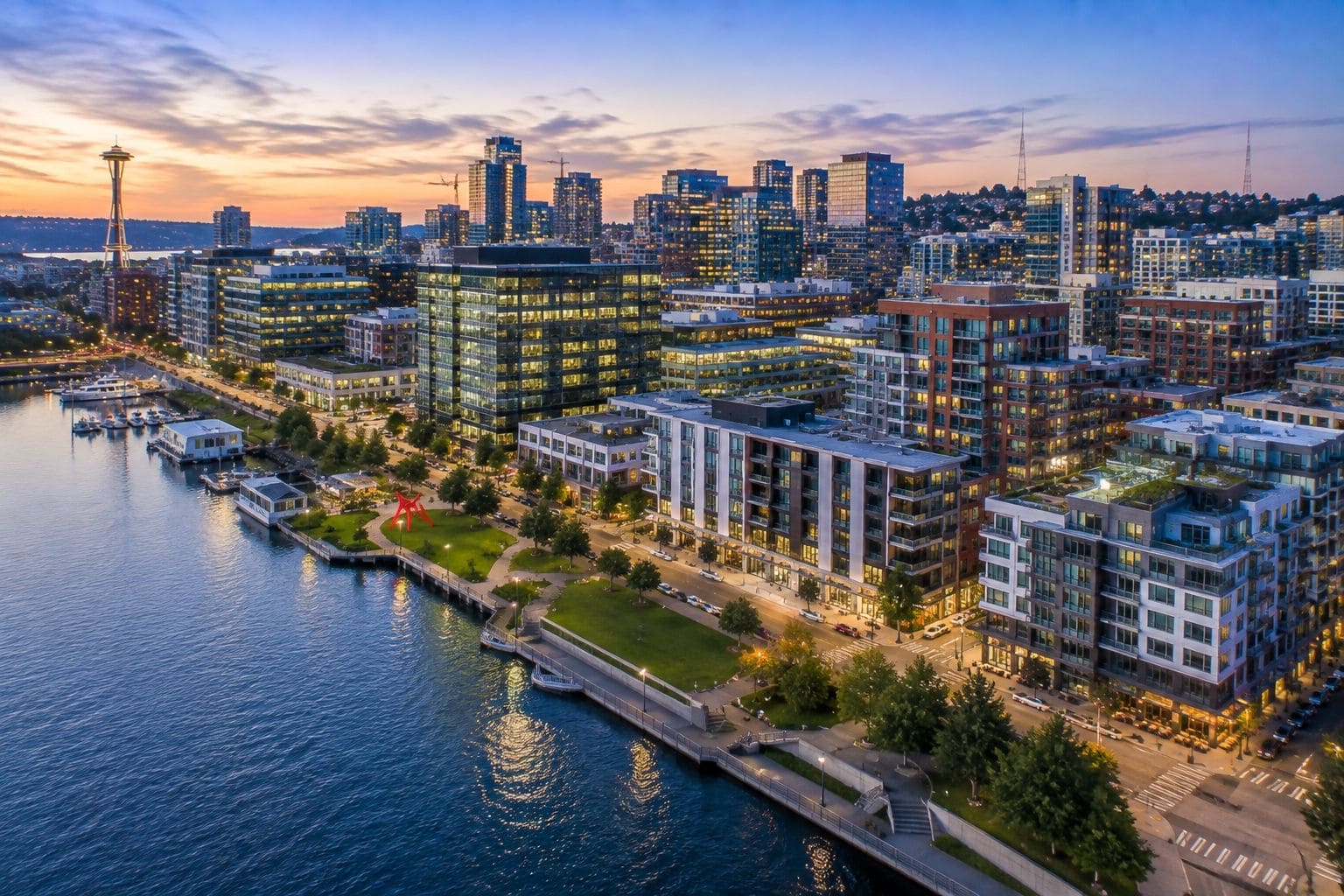
The Eastside specifically — Bellevue, Kirkland, Redmond, Bothell — continues to command premium rents driven by proximity to major tech campuses, top-rated school districts, and East Link Light Rail connectivity that has further integrated the Eastside with Seattle’s urban core.
South Lake Union, downtown Seattle, and Ballard carry some of the tightest rental absorption in the entire metro. Vacancy is low. Demand is consistent. And with fewer new units coming online, that dynamic is only expected to strengthen.
Here’s something I want every investor who has been sitting on the sidelines to hear: the buying conditions we’re seeing right now are genuinely uncommon for this market.
Inventory has increased. Buyers have more negotiating leverage than they’ve had in years. Sellers are more motivated. Days on market have extended in some segments, giving investors time to be thoughtful rather than reactive.
That combination — a fundamentally strong market with temporarily improved buying conditions — is exactly the kind of window that long-term investors look back on and wish they had moved through more aggressively.
This doesn’t mean every property at every price point makes sense. It never does. Real estate is always local, and the right investment depends on your goals, your timeline, and your financial position. But the window is open in a way it hasn’t been recently, and that matters.
Based on years of working with investors in this market, here’s what I consistently see working:
Think in five-to-ten-year windows, minimum. The investors who get frustrated are the ones expecting immediate cash flow in a market that rewards patience and equity growth. The ones who build real wealth are playing a longer game.
Location within the market matters enormously. Proximity to major employment centers, light rail corridors, and top school districts drives both rental demand and long-term appreciation. Bothell along the 405 corridor, for example, offers meaningful affordability by Eastside standards while remaining within commuting range of major tech campuses — making it one of the more underrated opportunities in the region.
Property condition is your competitive advantage. In a market where tenants have options, a well-maintained, well-presented property commands better rents and attracts better long-term tenants. This is an area where my concierge approach and vetted tradesperson network genuinely helps my investor clients.
Understand the regulatory environment. Washington State has a rent increase cap currently set at 9.683% for 2026. Knowing the rules — and planning around them — is part of investing successfully in this market.

Seattle and the Eastside is not a market for get-rich-quick thinking. It never has been. But for investors who understand what they’re buying into — a supply-constrained, demand-driven market anchored by world-class employment and consistent in-migration — it remains one of the most reliable long-term wealth-building opportunities in the country.
The fundamentals are strong. The supply picture is tightening. The buying conditions are as favorable as they’ve been in recent years.
If you’ve been thinking about making a move, I’d love to have a conversation about what investment property could look like for you — whether that’s a single-family home, a condo, or a small multifamily property somewhere on the Eastside or greater Seattle area.
I'm Gina Weigum with Windermere Real Estate. Reach out anytime — I'm always happy to talk through the numbers, the neighborhoods, and the strategy that makes sense for your goals.
Interested in exploring investment opportunities in the Seattle and Eastside market? Contact Gina Weigum at Windermere Real Estate to start the conversation.
#GinaWeigumHomes #SeattleRealEstate #EastsideRealEstate #RealEstateInvesting #BellevueRealEstate #WindermereRealEstate #InvestmentProperty #SeattleInvestor #PropertyInvestment #PacificNorthwest